Changing careers can be both exciting and challenging. Whether you are seeking better opportunities, higher income, improved work-life balance, or pursuing a passion, a successful career transition requires careful planning and preparation. With the right approach, you can confidently move into a new profession and achieve long-term career success.
Why People Change Careers
There are many reasons professionals decide to switch careers, including:
- Limited growth opportunities in their current field
- Desire for higher salary and benefits
- Better work-life balance
- Interest in a different industry
- Technological changes affecting their profession
- Pursuing personal interests and passions
Regardless of the reason, career transitions have become increasingly common in today’s job market.
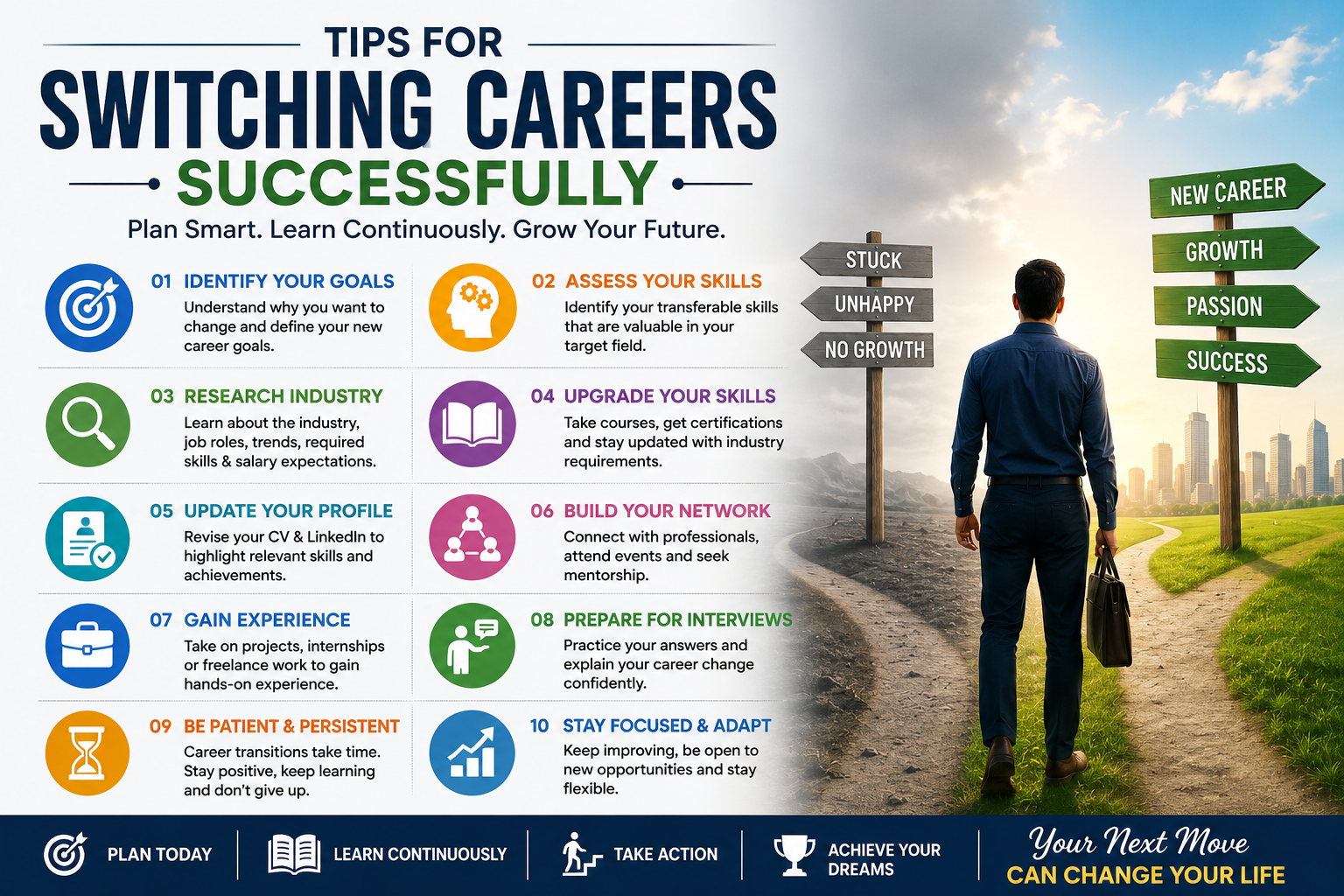
1. Identify Your Career Goals
Before making a career change, clearly define your objectives. Ask yourself:
- What motivates me to change careers?
- Which industries interest me?
- What type of work environment do I prefer?
- What are my long-term career goals?
Having a clear direction will help you make informed decisions throughout the transition process.
2. Assess Your Transferable Skills
Many skills can be applied across different industries. These transferable skills include:
- Communication
- Leadership
- Problem-solving
- Project management
- Teamwork
- Customer service
- Time management
Identify the skills you already possess and highlight them when applying for positions in your new field.
3. Research Your Target Industry
Understanding your target industry is essential. Research:
- Job requirements
- Industry trends
- Salary expectations
- Required certifications
- Career growth opportunities
The more knowledge you gain, the better prepared you will be for your transition.
4. Upgrade Your Skills
You may need additional training or certifications to qualify for your desired role. Consider:
- Online courses
- Professional certifications
- Workshops and seminars
- Industry-specific training programs
Continuous learning demonstrates commitment and improves your employability.
5. Update Your CV and LinkedIn Profile
Tailor your CV to emphasize relevant skills and achievements that align with your new career path.
Your professional profile should clearly communicate:
- Your career objectives
- Relevant skills
- Certifications
- Projects and accomplishments
Focus on showcasing how your previous experience can add value in your new field.
6. Build Your Professional Network
Networking is one of the most effective ways to discover new opportunities.
Attend:
- Industry events
- Professional conferences
- Networking sessions
- Career fairs
Connect with professionals who are already working in your target industry and seek their advice.
7. Gain Practical Experience
If possible, gain hands-on experience before making a full transition.
Options include:
- Freelance projects
- Part-time work
- Volunteering
- Internships
- Personal projects
Practical experience can strengthen your CV and boost your confidence.
8. Prepare for Interviews
Employers may ask why you are changing careers. Be prepared to explain:
- Your motivation
- The skills you bring
- Your commitment to the new field
- How your previous experience can benefit the organization
A positive and confident explanation can leave a strong impression.
9. Be Patient and Persistent
Career changes often take time. You may face challenges, rejections, or temporary setbacks.
Stay focused on your goals, continue learning, and remain open to opportunities that can help you gain experience and grow professionally.
Conclusion
Switching careers is a significant decision that can lead to new opportunities, personal growth, and greater job satisfaction. By identifying your goals, developing relevant skills, expanding your network, and remaining persistent, you can successfully transition into a rewarding new career.
Remember, every career journey is unique, and with proper planning and determination, your next professional chapter can be your most successful one yet.