
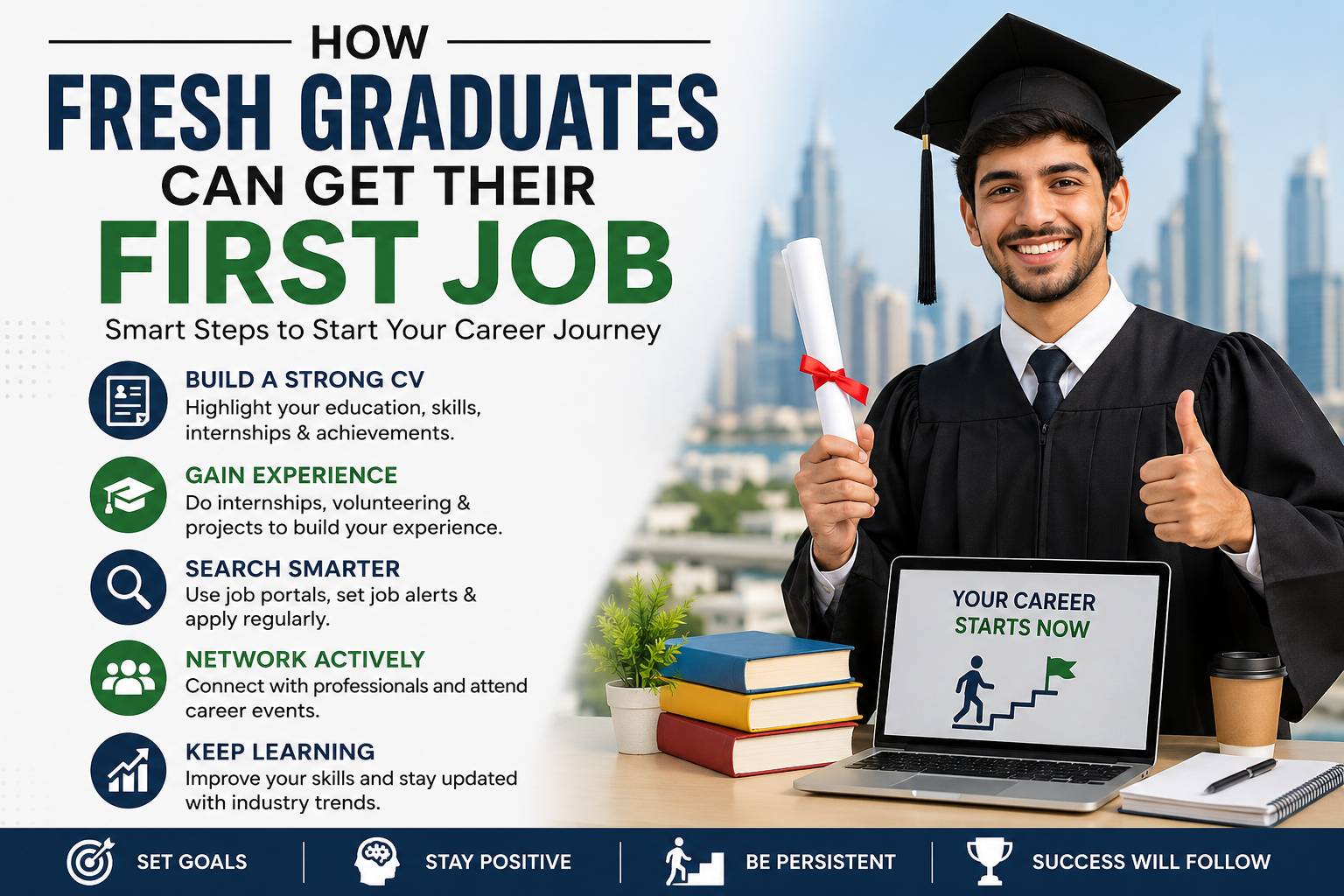
Graduating from college or university is an exciting milestone, but finding the first job can be challenging. Many fresh graduates face the common obstacle of having limited work experience while employers often seek experienced candidates. However, with the right strategy and preparation, fresh graduates can successfully enter the job market and begin building their careers.
1. Create a Professional CV
Your CV is often the first impression employers will have of you. Even if you have limited work experience, highlight your:
- Educational qualifications
- Academic achievements
- Internships
- Volunteer work
- Projects and research
- Relevant skills and certifications
Keep your CV clear, professional, and tailored to the position you are applying for.
2. Build In-Demand Skills
Employers value candidates who continuously improve their skills. Consider taking online courses and certifications in areas such as:
- Microsoft Office
- Project Management
- Data Analysis
- Digital Marketing
- AutoCAD
- Programming Languages
- Communication Skills
Adding certifications to your CV can make you more competitive.
3. Gain Experience Through Internships
Internships provide valuable workplace experience and help graduates understand professional environments. Even short-term internships can strengthen your CV and demonstrate your willingness to learn.
4. Use Job Portals Effectively
Register on reputable job websites and keep your profile updated. Upload a professional photo, complete your profile, and regularly apply for suitable vacancies.
Set up job alerts to receive notifications about new opportunities in your field.
5. Develop a Professional Online Presence
Many recruiters review candidates online before scheduling interviews. Maintain a professional profile on networking platforms and showcase your education, skills, and achievements.
Connect with professionals in your industry and engage with relevant content to increase your visibility.
6. Prepare for Interviews
Interview preparation is essential for job seekers. Research the company, understand the job requirements, and practice answering common interview questions such as:
- Tell us about yourself.
- Why do you want to work with our company?
- What are your strengths and weaknesses?
- Where do you see yourself in five years?
Confidence and preparation can significantly improve your performance.
7. Network with Industry Professionals
Networking can open doors to opportunities that may not be publicly advertised. Attend career fairs, professional events, seminars, and industry gatherings whenever possible.
Many successful careers begin through professional connections and referrals.
8. Be Open to Entry-Level Positions
Your first job may not be your dream role, but it can provide valuable experience and help you develop professional skills. Focus on learning, growing, and building your career foundation.
Every successful professional started somewhere.
9. Stay Positive and Persistent
Job searching requires patience and determination. Rejections are a normal part of the process and should be viewed as learning opportunities rather than setbacks.
Continue improving your skills, refining your CV, and applying consistently.
Conclusion
Getting your first job as a fresh graduate can be challenging, but it is achievable with the right approach. Focus on building skills, gaining experience, networking, and presenting yourself professionally. With persistence and continuous learning, you can successfully launch your career and achieve your professional goals.
Good luck with your job search journey!